When to Pressure Wash Brick Pavers in South Florida
Brick pavers are tough, but the film that builds up on them in a humid climate makes them look tired long before they are.
October 21, 2026 · 4 min read
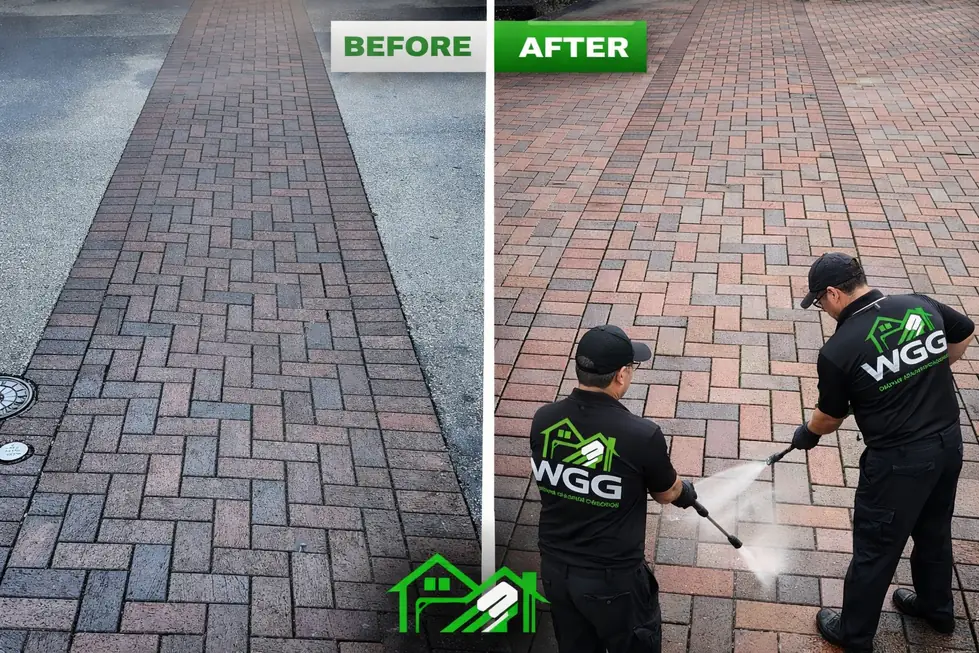
Brick pavers look their best right after they're laid, and then South Florida goes to work on them. Heat, humidity, daily rain and foot traffic leave a film on the surface that most people stop noticing until a clean patch shows them what the color is supposed to be. If your walkway, driveway apron or plaza frontage has gone gray, green or blotchy, this guide covers how to tell it's time to wash, and what a careful wash actually involves.
Why pavers dull so quickly here
Brick is porous. It soaks up moisture, and in a humid climate it rarely dries out completely, especially in shade. That damp surface is exactly where mildew and algae settle in. Rain adds to the problem rather than solving it: runoff carries dust, pollen, leaf debris and oil from nearby asphalt onto the pavers, then leaves it all behind as the water evaporates. Add shoes, tires, delivery carts and the occasional leaking vehicle, and a layer of grime builds up in just a few seasons.
The color change is gradual, which is why it's easy to miss. Red brick turns brownish gray. Tan pavers pick up dark streaks along the paths people walk most. In shaded corners, a green tint appears. None of this means the paver itself is failing, but it does mean the surface is holding dirt and moisture, and that can make it slippery.
Signs it's time to wash
You don't need a calendar to decide. Look for these:
- A green or black tint in shaded areas, along walls, and near downspouts or sprinklers.
- A clear difference between the swept center of a path and its edges, or between sunny and sheltered sections.
- Dark tire tracks, oil spots or drip marks near parking spots and drive-thru lanes.
- A slick feel underfoot after rain or when the irrigation runs.
- Moss or weeds starting to take hold in the joints.
- Visitors or customers steering around a stained area instead of walking across it.
If you spot two or three of these, a wash is probably overdue. The slick feel matters most. A walkway that's slippery is a safety issue, not just an appearance one, and for a business it's the first thing to act on.
What a careful wash looks like
Pressure washing sounds simple, but brick is not concrete, and the wrong approach can do lasting damage. Too much pressure, or a tip held too close, can etch the face of the paver, blast sand out of the joints and leave striped lines that look worse than the dirt did. A careful job starts by matching the pressure and the nozzle to the surface in front of you. Older, softer brick and worn mortar get a gentler hand than newer, dense pavers.
Good technique is mostly patience. The wand stays at a steady distance, passes overlap evenly, and the operator works in a consistent pattern so the finished surface looks uniform instead of streaked. Heavily stained spots get extra time rather than extra force. The goal is a clean, even surface, not the brightest patch you can make.
Joints, edges and runoff
Most of the trouble after a wash comes from what's around the pavers, not the pavers themselves. Joint sand is what holds the stones in place, so it's worth checking after a wash and topping it up if some has washed out. Edges beside planting beds, walls and pool decks need care so water and debris don't get pushed where they shouldn't go. Before starting, furniture, planters and mats should be moved, and nearby plants and fixtures protected.
Runoff deserves a plan too. Dirty water shouldn't pool at a doorway, flow into a neighbor's space or push debris into a drain. On a commercial site, that means thinking about where the water will go before the first pass, and sweeping up loose material afterward so it doesn't end up right back on the surface.
Homes and commercial plazas are different jobs
A home walkway and a plaza frontage look similar, but they run on different schedules. At a house, the questions are usually about access: moving cars, covering plants and picking a dry window. At a commercial property, it's foot traffic and hours. Washing an entrance or a drive-thru lane while customers are using it creates slip risks and annoyed visitors, so the work is often planned around opening and closing times.
Commercial surfaces also tend to carry more than ordinary dirt. Gum, oil drips and tire marks from busy lanes and parking spots take more attention than a garden path, and high-traffic strips usually dull first. Those are the sections to look at when you're deciding whether the whole area needs washing.
After the wash
Once the pavers dry, you'll see the true color again. If you want it to last, sweep regularly, trim back plants that keep the surface damp, and fix any sprinkler that sprays across a walkway. Each of those slows the return of mildew. A walk-through after the job is also the right moment to point out anything you'd like a second look at.
WGG Services Facility LLC offers power washing for homes and commercial properties across South Florida and Miami-Dade, and estimates are free with no obligation. Call or text (786) 751-8469 and we'll talk through what you've got and when it makes sense to come out.
WGG Services Facility LLC, (786) 751-8469
Call (786) 751-8469More articles
What Happens Before the First Coat of Interior Paint
A smooth, even finish is mostly decided by the work nobody sees once the room is done.
Exterior Paint Under Florida Sun, Rain and Salt
Exterior paint in South Florida has more to fight than paint almost anywhere, and the prep decides how long it holds.